The MoonDrop Chu 3 is one of the best budget IEMs of 2026
If you’re reading this, you probably Googled “What is the best budget IEM?”. Well, let me give it to you straight. Just buy the MoonDrop Chu 3.

Introduction
If you’re reading this review, you probably Googled “What is the best budget IEM?” or some version of that. You’ve probably come across IEMs like the Truthear Gate or 7Hz Salnotes Zero 2 or Tangzu Wan’er SG2 or maybe even the MoonDrop Chu 2. And now you’ve stumbled upon the brand new MoonDrop Chu 3.
Well, I’ll give it to you straight. Forget all of that and just buy the MoonDrop Chu 3. Because I know what’s going to happen. You’re going to spend the next 10 hours or more looking at dozens of reviews for “THE BEST BUDGET IEMS!” and get more and more and more confused about what to spend your $25 on. Don’t do that. Your time is more valuable than that.
But if you don’t believe me yet, fine. Hopefully the next 10 minutes of text will save you 10 hours.
Source(s) Used: CrinEar Protocol Micro
What we like
- Excellent bass quality for the price
- Competent tonal balance across the board
- Coherent imaging presentation (potentially great for gaming)
- Small metal shells
- It’s $25
What we don’t like
- Brass nozzles may oxidize over time

What's in the Box?
It’s a $25 IEM so the packaging is bare-bones. You get:
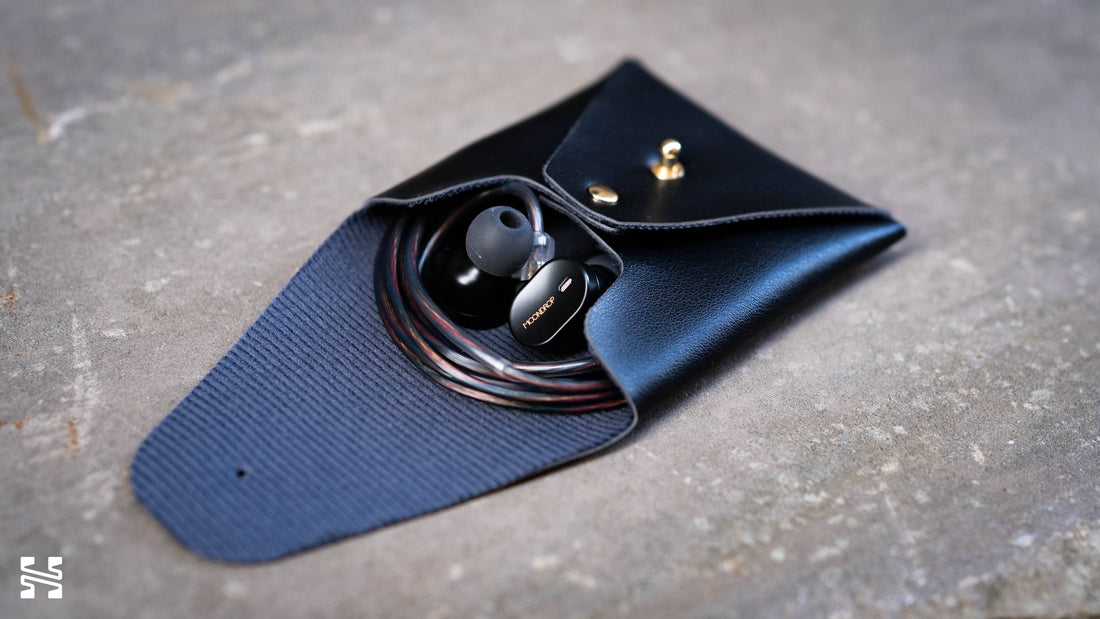
- A little leatherette carrying pouch
- Silicone ear tips in the standard S/M/L sizes
- A basic 3.5 mm 2-pin cable
- The MoonDrop Chu 3 itself
The accessories themselves are unremarkable. As for the Chu 3, the shell design is almost identical to its predecessors. It’s robust with a full metal shell and now features a more prominent vent on the back, presumably for acoustics.
However, this means it retains the brass nozzles, which is unfortunate. Brass will eventually oxidize and turn green like the Statue of Liberty. Pro tip: You can slow this down by not putting IEMs in your ears immediately after a shower.
Comfort wise, this is where the Chu 3 has a step up from many other budget IEMs. It’s small. It fits nicely in most ears and the angle of the nozzle allows for a deep fit without any issue. I wouldn’t call it the most comfortable IEM out there with its 6 mm nozzle diameter, but I’d be surprised if anyone has a real problem with its ergonomics.

Sound - Objective
Here are frequency response measurements of the MoonDrop Chu 3 calibrated to Headphones.com’s IEM Diffuse Field (DF) HRTF. These measurements are taken by our friends over at hangout.audio using the industry-standard B&K 5128 measurement rig.
In extremely simplified terms, if the frequency response (green line) is within the preference bounds (dotted lines), the IEM is likely to sound balanced. And that means it’s most likely to be preferred by the average person - hence the name, preference bounds. That said, 1) You are not an average person; and 2) There’s no reason why you can’t enjoy multiple types of tunings. It’s a question of probability.

And here is the raw, uncalibrated version of that for a different perspective.

As we can see from the graph, the Chu 3 can be generally described as balanced to a mild V-shape depending on your preferences. It’s not strictly neutral - there is a healthy bass emphasis, a focused midrange, and a moderate dash of treble brilliance. However, it’s these characteristics that make it a solid beginner’s recommendation.
If all of that confused you, don’t worry. Read on for a human interpretation of how the Chu 3 sounds actual ears. Do note that this review is from the perspective of someone who’s used to balanced sounding gear. Keep this in mind if your only experience with headphones or earbuds has been the typical V-shaped consumer products you find at Best Buy.
Sound - Subjective
Bass

The bass of the Chu 3 is immediately one of its strongest points for me. It’s fairly elevated and rises deep into the subbass. It’s enough that you’d be justified in calling the Chu 3 a boomy sounding IEM, especially in drum notes. What sets the Chu 3’s bass apart from its contemporaries is its quality. While it is boomy, it doesn’t sound loose or muddy. Rather, bass notes are firm, full, and weighty. There’s a lot of definition on display for this level of bass.
However, it does lack a bit of subbass texture and rumble, likely overshadowed by the energy in the mid and upper bass regions. But that’s something you’d have to be listening for and is a very minor nitpick in an overall excellent package.

Mids
Next, let’s talk about the midrange. I would characterize it as being slightly forward and focused. There’s a great sense of upper mids clarity accentuated by a tasteful dip in the lower mids. If you metaphorically squint your ears, you could call it lean. But I doubt most would even notice it without someone like me putting that thought in their mind, especially those who haven’t had experience with dozens of IEMs.
Instead, the Chu 3’s midrange tuning comes through as simply being clean and clear. Vocals come through effortlessly. Electric guitars sing above the mix. Snare drums get their sharp crack. Pianos have a lighter touch in their tone. For as much bass as the Chu 3 has, I’d classify it as a mid focused IEM.

Treble
Rather than being a bright IEM, the treble of the Chu 3 is analogous to the cliche example of slightly raising the contrast and saturation on an image to give it a sharper look. It’s there to add a dash of brilliance and vividity without being the defining feature of the IEM. It’s restrained in the lower treble so the transients of hats and cymbals have crispness without being overwhelming. It’s the mid treble that rises to lift and bring an overall brightness.
I don’t find the Chu 3 to have any major issues with sibilance and harshness nor did I feel like I needed to squash any peaks. That’s not to say the peaks don’t exist. They do, and they do affect the timbre a little to tilt some of the hats and cymbals towards the thin side. But it’s not obnoxious or painful by any means.

Presentation
One of the strengths of the Chu 3 is its clear, seamless presentation. By that I mean it’s right on par with any good IEM that’s 10x or more the price. The Chu 3’s soundstage width extends just a little past my ears and there’s even a little bit of stage height for separation. Imaging is excellent as I find there to be a focused, coherent sense of positioning of instruments, likely thanks to the great balance between the bass, mids, and treble the Chu 3 has. One of my first thoughts while listening was “This IEM is going to be great for gamers."
While some may prefer a more relaxing listen to savour music at their own pace, I think the Chu 3’s strength lies in the fact that it invites listeners to pay attention to the lead lines and melodies, to hear the note separation, the imaging, and the clarity, for themselves. It’s what many consumer-fi products attempt to achieve with crude, exaggerated V-shaped implementations. The Chu 3, like many of the great IEMs I’ve reviewed, is simply a much more sensible take on achieving an engaging sound without compromising coherency and timbre. Oh, and once again, it’s $25.

Comparisons - Truthear GATE
There are countless options to compare the Chu 3 to. I’ll pick just one - the Truthear GATE, arguably the most popular budget IEM of yesteryear. Here are their frequency response graph for reference.
The GATE is a great IEM for $25. And if you look at how it graphs, the GATE seems to be even better than the Chu 3. More of it falls within the preference bounds. But I prefer the Chu 3.

In comparison to the Chu 3, the GATE’s bass is weak. Yes, the increased bass quantity of the Chu 3 obviously adds to this feeling. But beyond just quantity to add impact and weight, the Chu 3 has an added sense of firmness and definition that the GATE lacks. And while the Chu 3 looks like it may have bloat in the mid bass and lower mids, I don’t find that to be the case. It’s boomy, but not bloated or muddy. The added low end also helps its midrange sound not quite so forward.
A lot of that perception comes in the treble. The GATE isn’t as generally bright like the Chu 3 due to the mid-treble dip it has. However, I find the GATE’s treble to be somewhat unrefined and messier than the Chu 3. The Chu 3 has a bit more of a focus and clarity to its sound than the GATE. Once again, the GATE is still a great IEM for the price and you would be well served by it. The Chu 3 just happens to be a bit better.
 On a build quality level, the Chu 3 is a lot more premium than the GATE. The GATE’s shell is very light and plastic-y and just feels cheap compared to the Chu 3’s metal build. Comfort is about the same for both. The GATE has a more traditional IEM shell design while the Chu 3 goes for the more compact form factor.

Should You Buy It?
Yes. Whenever I review a budget IEM, I’m always asked to compare it against a dozen or so other popular budget IEMs. I used to do it. But not any more. The simple fact of the matter is that they’re all pretty good and sound fairly similar to one another. And even if I take the time to write paragraphs upon paragraphs of differences in painstaking detail, it ultimately won’t matter. Because without a frame of reference, 90% of what I say will not make any sense.
Think about it. The person looking to buy a budget IEM is almost certainly looking to buy their very first pair of “good wired earbuds”. There is no point of reference to even begin to understand the minutiae that a reviewer might nitpick in a review. To understand, you must first experience. I don’t say that to be condescending. It’s simply the audio equivalent of how a picture is worth a thousand words. Of course, do some research to see if there’s something particularly polarizing with an IEM you’re looking at. Just don’t let it consume your life.
All of that is just a long winded way of saying: buy the MoonDrop Chu 3. It’s a $25 stepping stone into the audio world. Spend your time organizing your perfect test playlist instead.

