ASUS ROG x HiFiMan: New Flagship Hi-Fi Gaming Headset at CES 2026
ASUS has just teased a new upcoming flagship gaming headset in partnership with HiFiMan to be revealed at CES 2026. Here's what we might expect from this.


Jan 06, 2025 Update: ASUS has released full details regarding this new gaming headset in collaboration with HiFiMan, now called the Kithara. While most of my speculation below is now incorrect, please read the Audiophile Primer section to better understand the audiophile marketing terms that ASUS has in their press release.
Introduction
On Jan 2, 2026, ASUS posted a cryptic teaser for a new flagship hi-fi gaming headset to be revealed at CES 2026. Specifically, this will be under the ASUS ROG brand and it is in partnership with a very well-known name in the audiophile space: HiFiMan.
A new flagship hi-fi gaming headset is coming…
Powered by HIFIMAN, built to set a new bar for gaming audio.
Hi-fi precision meets tactical performance.
Unveiling at ROG #CES2026.
Stay tuned. 🔥🎧
While details are sparse at the moment, we do have a lot to go on given that it’s a gaming headset made by HiFiMan. Here’s what we know, what we can expect, and a quick primer to the often confusing world of audiophile headphones.
These are my personal thoughts based on my experience and knowledge of the audio hobby.
What We Know
HiFiMan is famous in the audiophile space for their open-back planar headphones. From their $6,000 flagship Susvara to entry level products like the $100 HE400se, they’re second only to Sennheiser in popularity. It’s no exaggeration to say that HiFiMan is a poster child for the stereotypical image of hi-fi headphones.
It’s no wonder then that a gaming company might want to team up with HiFiMan to leverage their audio expertise. In fact, we saw a similar story with Sony Interactive’s acquisition of Audeze (the 2nd biggest planar brand) to create their new Sony Pulse Elite gaming headset.
But while Audeze had been developing audiophile gaming products for years and culminating in the excellent Audeze Maxwell, HiFiMan has not. They’ve focused solely on the traditional audiophile market. While HiFiMan has a few closed-back or wireless products in their portfolio, these models have not been well-received. It’s why this partnership with ASUS is both surprising and very interesting.

ASUS’ short teaser video gives away almost nothing. It’s a vague render in the shape of a headphone. The only detail I can make out is that there looks to be a thick headband or suspension strap. There’s not even an outline of a microphone boom arm. But given that this is a gaming headset, it should be a wireless closed-back. Right?
Let the speculation begin.
What We Might Expect
I think there are two routes this partnership could go.
HiFiMan repurposes one of their existing open-back headphones and ASUS sells it under their ROG brand. Most likely this would be one of their older mid-tier offerings such as the Sundara or Edition XS, both of which are excellent headphones. I lean towards the Edition XS due to the thick headband and large earcups most resembling the frame of the Edition XS.
HiFiMan headphones tend to have circular or oval-shaped earcups, with the Edition XS being the latter. The oval-shaped ones in particular tend to have a very open sound, lending to a greater perception of the soundstage experience. While the Edition XS is a bright sounding, audiophile-first headphone, its large soundstage and imaging prowess would be an easy hook for a gaming marketing pitch. And given HiFiMan’s poor track record of closed-back headphones, it might be a good idea to stick with an open-back.
However, for those paying attention, this would mean it’s not a headset. Of course, they could make it one by adding a microphone to the cable and performing some minor sonic tweaks. But frankly, this approach doesn’t feel worthy of the hype ASUS is trying to build around their new flagship headset.
For those interested, here are a couple reviews of the Edition XS. Video | Written

Alternatively, they could build a new headset: HiFiMan for the sound, ASUS for the gaming tech. Taking a headphone like the Edition XS and adding new features would be far more interesting than a straight rebrand - and it’s the route I’m personally hoping for.
Coincidentally, HiFiMan announced a couple of open-back wireless headphones a few months ago. The twist here is that it’s one of the few headphones to use WiFi for the connection instead of a wireless dongle or Bluetooth solution. This allows for streaming audio without any compression. DSP is done at the cups that house the DAC and amp and is adjustable using an app. While these wireless headphones have yet to hit the market, it shows where HiFiMan is heading.
However, there are two reasons I’d be concerned with this approach. The first is that a WiFi connection system would be a lot more finicky than using a 2.4 GHz wireless dongle like other gaming headsets do. The second is that HiFiMan simply does not have the expertise in developing software. They have some rudimentary apps, but a proper, polished gaming software suite is something we have not seen from them before.

As such, I expect ASUS to have to step in here and make the headphone much more like existing headsets on the market. This means adding a boom mic, providing a dedicated wireless dongle (i.e. no WiFi connection), and developing software to go along with this headset to give gamers a wide range of customization options. Maybe colour it black and add some RGB. Or throw in some AI for good measure.
The key question is if it will be closed or open-back. Closed is the default answer, but I would be intrigued to see it be open-back. That would make it the first of its kind and better justify ASUS’ claims of a hi-fi gaming headset. While noise leakage and isolation are concerns, flagship headphones aren’t meant for everyone to begin with. This headphone will be targeting a very specific crowd of gamers.
If we were to get a wireless headset from ASUS and HiFiMan, regardless if it ends up open or closed back, I hope that DSP is front-and-center of this headphone’s tuning. Given all the additional electronics that go into a wireless headphone, not utilizing DSP or EQ is giving up one of the most powerful tools in the acoustic toolbox.

The Audeze Maxwell’s audio customization options.
An Audiophile Primer
If some of the terminology above confused you, let me clarify a few things about “hi-fi” audio and give you an introduction to the world of audiophile headphones.
Traditionally, there are two types of wired headphones. Closed-back and open-back. Closed-back headphones isolate sound better than open-backs (which also leak sound out to the room), but they face greater challenges for sound quality. For this reason, open-back headphones are what’s typically associated with hi-fi headphones (e.g. Sennheiser HD800S) while closed-backs are used more in the studio (e.g. Audio Technica M50x).
There are a few different types of headphone driver technologies. Dynamic drivers are the most common and are found in the vast majority of standard consumer headphones. Planar magnetic drivers are the second most common and are slowly starting to be incorporated into products beyond typical audiophile headphones. HiFiMan uses planar magnetic drivers.
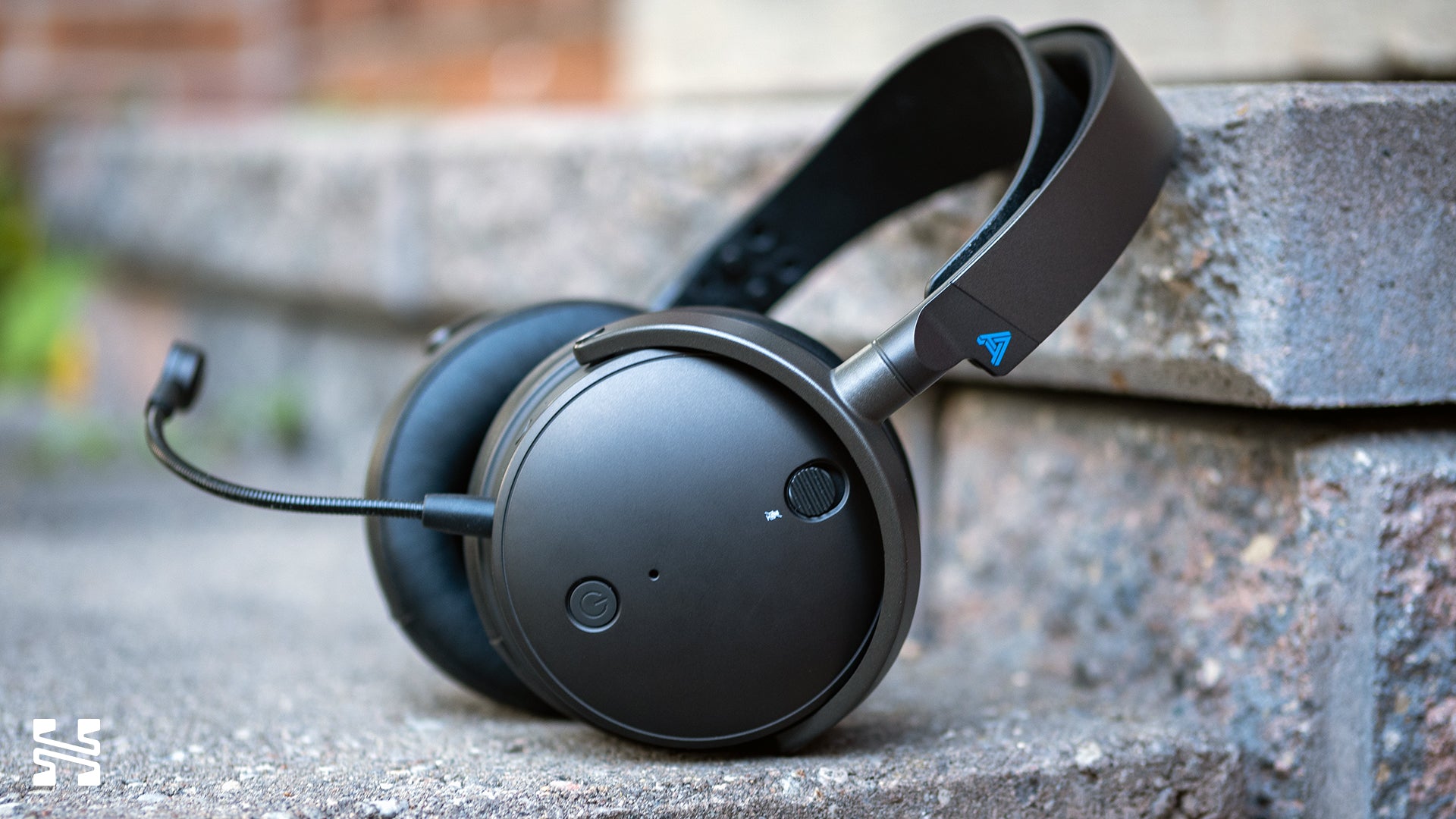
Wireless does not always mean lower sound quality. There are two major advantages of wired headphones: 1) No latency and 2) No audio compression. With improvements in technology, we can decrease latency but never get rid of it completely. But compression, that is something that can be fixed. Wireless dongles are the solution. No Bluetooth needed.
Regardless of the headphone or technology, the primary factor that determines sound quality is frequency response. More than the number on the back of the box that says 20 Hz - 20 kHz, HOW a headphone delivers those frequencies is what matters. This is what we call the tuning of a headphone, and we can determine this through frequency response measurements. This is a very big topic, so see the bottom of this article for further resources.
Wireless headphones often use DSP. Digital signal processing (DSP) is the umbrella term for audio effects used to change sound quality. EQ is the most common example of this, but other effects like Dolby Atmos or ANC are a type of DSP. Importantly, DSP can be used to change the frequency response and many gaming headphones take advantage of this fact through preset profiles like “FPS” or “Footsteps”.
Hi-fi is a marketing term. There’s nothing inherent in a headphone’s design that makes something “hi-fi”. It’s just an easy way for brands to sell expensive products if they label it so. Products don’t need the hi-fi label to sound good. Nor do they need to be expensive. There is no correlation between price and sound quality. Trust me, I’ve heard gear that costs $30,000 sound worse than something that costs $300.

Pricing
Before we wrap it up, let’s talk pricing. I suspect this headphone will land around the $500 mark. Looking at HiFiMan’s pricing historically, its mid-tier headphones come around this range. The 2020 Sundara stood at $350 for some time while the 2022 Edition XS had an MSRP of $500 and the recent Edition XV is $400. While the older Sundara and Edition XS can be had for $200 nowadays, I doubt ASUS or HiFiMan would want to position a flagship anything lower than $300. After all, profit will need to be split between two companies. Basing it around the Edition XS’ initial price makes the most sense to me.
Compared to other products in the market, the aforementioned Audeze Maxwell sticks out as the most direct competitor. Or rather, the Audeze Maxwell 2. While full details on it will also only be available after CES 2026, early leaks have it as being an incremental upgrade to the original Maxwell and the price is expected to be around $300.
On the other hand, if ASUS is truly looking for the premium flagship position, they might choose to follow suit with Steelseries’ $600 Arctis Nova Elite. HiFiMan certainly is no stranger to high price tags. With the prices of electronics all skyrocketing, I would not be surprised if this is the route ASUS ends up taking.

Conclusion
As someone deep in the audio hobby, ASUS’ partnership with HiFiMan is extremely exciting. If done right, it may serve as a major bridge between mainstream consumer electronics and niche “hi-fi” gear. Everyone enjoys music. There’s no reason you can’t do it with your gaming headset.
CES 2026 is in just a few days and I’m prepared to be fully wrong about all of my speculations. While I haven’t gotten my hands on one, we expect to have a full review of it soon at our The Headphone Show YouTube channel. So stay tuned!
- Fc-Construct
Further Resources
I’ll leave some further resources if you’re interested to learn more about headphones and IEMs in general.
Sound quality in headphones explained and How to read the new measurements - I mentioned frequency response measurements at the start of this article. These two videos will help you understand what that means.
Don't Buy Headphones Until You Watch This - If you’re at all interested in high quality headphones, this is the guide to get you started.
The Headphone Show’s Review of the Audeze Maxwell - An in-depth video review covering everything about the Audeze Maxwell. Though a little old, it’s still a great place to start for more context on audiophile gaming headsets.
Are Gaming Headsets just Better than Audiophile Headphones Now? - This video further discusses how DSP is able to help gaming headsets sound as good as traditional audiophile headphones.
Best Over-Ear Headphones of 2025 (Mid-Fi Edition) - An updated buyer’s guide to the best headphones you can get today.
The Best IEMs Under $500 - Start of 2026 Edition - If you’re interested in IEMs, here’s an introductory buyer’s guide with recommendations for products between $100 - $500.
Gaming Audio: Separating the Truth, the Myths, and the Marketing - I wrote this guide to help people understand what exactly “gaming audio” entails and provide a few recommendations for your gaming audio set-up. It also explains some of the basics of tonal balance as well.
For more information, check our reviews here at The Audio Files, over at The Headphone Show on YouTube, and join our Discord server where we have a great community of enthusiasts happy to talk about all things audio, especially if you want to make that jump into the deeper audiophile world.

