Sennheiser's Consumer Division Is Being Sold. Again.
After 4 years of ownership, Sonova has announced the sale of its Sennheiser Consumer Hearing division. Here's what it might mean for the audiophile community.


The Top Line
Today, March 23, 2026, Swiss hearing aid company Sonova Holding AG announced its intention to divest its Consumer Hearing business — the division that operates under the Sennheiser brand. Taken from their press release (and bolded where most relevant):
"Following a strategic portfolio review, Sonova will concentrate its investment and execution on hearing instruments and cochlear implants in the future. Accordingly, it intends to divest its Consumer Hearing business to align its portfolio with innovation priorities. Sonova will seek the best owner for the business, which competes in premium consumer audio under the Sennheiser brand and has distinct channels, consumer dynamics, and R&D cycles. The business will be treated as discontinued operations for accounting purposes as of the FY 2025/26 results."
Critically, this does not affect Sennheiser's professional audio or microphone divisions; those remain with the original Sennheiser family company as it did when the first time Sennheiser sold its consumer division to Sonova for $241M in a deal announced in 2021 and completed in 2022. But now, just four years later, Sonova is looking to exit the premium consumer market.

A Brief Corporate History
Sennheiser was founded in 1945 in Germany and grew into one of the most respected names in both professional and consumer audio. At its peak, the family-owned Sennheiser Group operated four divisions: Professional Audio, Consumer Electronics, Business Communications, and Neumann.Berlin.
Over the past decade, the family has progressively sold off pieces of that empire. First was a joint venture in Business Communications that was dissolved into the EPOS brand under Danish healthcare group Demant in 2020 (and recently acquired by ACCO Brands in 2025). Then in 2021, Consumer Electronics was fully acquired by Sonova in 2022 with a perpetual license agreement to use the Sennheiser brand name. Today, the original Sennheiser family company retains its Professional Audio, Business Communications, and Neumann.Berlin divisions.

A Troubled Tenure?
Sonova's rationale for the acquisition was to engage consumers early on their hearing journey, using premium headphones as an early touchpoint. However, the Consumer Hearing business remained small and only accounted for 6% of Sonova's total group sales. The most recent half-year results show a worrying future as the division's sales declined by 11.6%. Sonova’s Consumer Hearing tenure was further troubled by a nearly €6 million fine from the German Federal Cartel Office in 2025 related to retail pricing practices that predated the acquisition.
That said, the Consumer Hearing division hasn't been standing still. Under Sonova, the division seemingly shifted priority initially towards the wireless products by leveraging the Momentum name. But recent product launches in the last two years such as the HD 505, HD 550, and HDB 630 suggest an active roadmap and pivot back to the traditional audiophile market that Sennheiser was known for. These new releases have largely been met with community praise and a sense of a return to form. Similarly, Sennheiser's marketing presence in the consumer space has been growing in enthusiast forums like Reddit, Head-Fi, and YouTube. Today's announcement thus is not necessarily a reflection of the health of the consumer audio business itself, but the result of Sonova's own strategic priorities shifting.

Sennheiser Isn't Alone
This news comes on the back of a broader trend of audio brands changing hands in recent years. In 2023, Audeze was acquired by Sony Interactive Entertainment, the PlayStation division of Sony. In 2024, Bose acquired the McIntosh Group, bringing McIntosh and Sonus faber under its umbrella. Beyerdynamic, another well-respected German audio company with over a century of family ownership, was acquired by Shenzhen-based Cosonic Intelligent Technologies for €122 million in 2025. And just two weeks ago, Focal and Naim were acquired by Belgian AV company Barco for €135 million on March 9, 2026.
A gaming company, an industry leading audio brand, a Chinese manufacturer, and a B2B AV company. Each acquisition reveals a different story about buyer motivation. But for the audiophile community, Sennheiser's sale is the latest and perhaps most significant chapter in this ongoing consolidation of the audio industry.
What Does This Mean for Audiophiles?
As previously noted, this sale does not affect Sennheiser's professional audio division. Microphones, wireless systems, in-ear monitoring, and Neumann products remain with the original Sennheiser family company and are unaffected. What is affected is the entire consumer product lineup, which includes Sennheiser’s classic audiophile headphones.
As a general rule, if a product appears on sennheiser-hearing.com, it falls under Sonova's Consumer Hearing division and not Sennheiser’s Professional Audio unit at sennheiser.com (which often uses the Pro suffix). Thus, the following products (and more) would be subject to the sale:
- The Momentum wireless headphone and earbuds lineup
- The HD 400 and HD 500 series
- The HD 600 series
- The HD 800 series
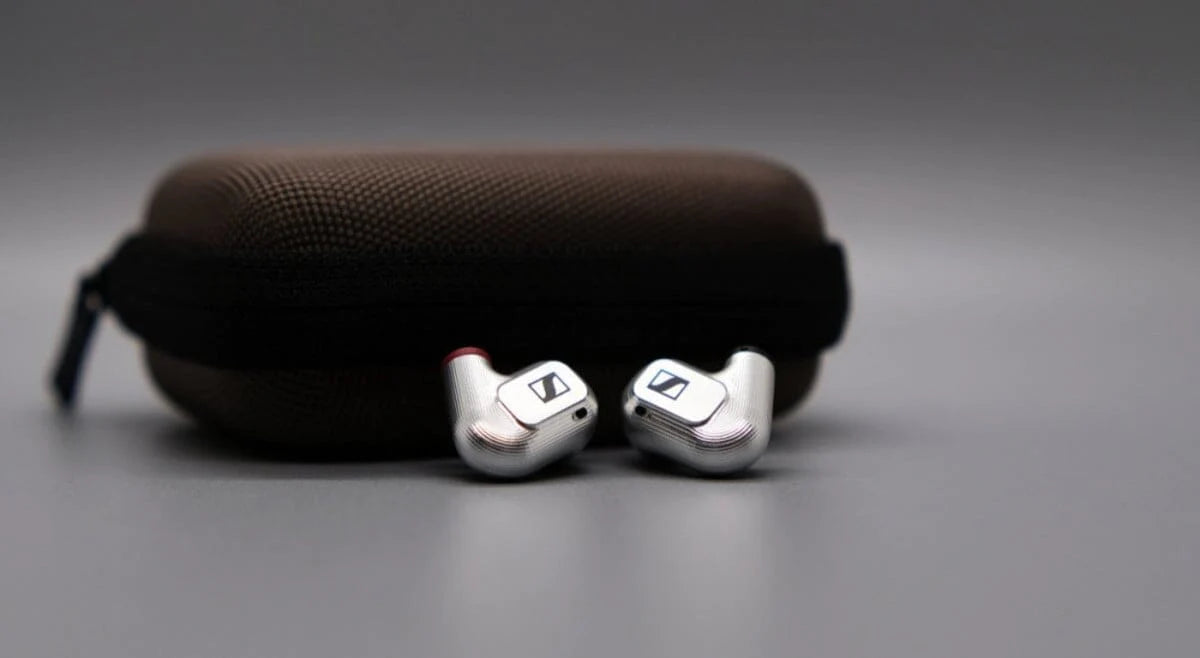
- The IE series IEMs, including the IE 200, 600, and 900
- The flagship £74,999 HE-1 (at the time of writing)
Effectively, the vast majority of Sennheiser’s most beloved audiophile products could soon be under new leadership.

What Happens Next?
At this time, no buyer has been announced. While Sonova’s press release states that “the business will be treated as discontinued operations for accounting purposes as of the FY 2025/26 results”, no other timeline has been given either. In any event, the future of Sennheiser's consumer division - and the audiophile products within it - depends entirely on who acquires it and why. As seen with previous audio acquisitions, a variety of buyer motivations are at play.
In my opinion, the Sennheiser name remains a strong brand regardless of the unit’s financials. Prospective buyers would almost certainly understand the legacy and reputation Sennheiser has in the audio community; it wouldn’t make sense to acquire it carelessly. And with the recent market activity we’ve seen from Sennheiser, it is evident that at a commercial level, there is a long term marketing roadmap being implemented.
Optimistically, the buyer will purchase Sennheiser to enhance and diversify their overall portfolio, leveraging potential synergies from Sennheiser's technology and R&D capabilities where relevant while allowing the Sennheiser brand to continue its existing roadmap with little interference. This is not without precedent - when Edifier acquired the legendary Stax in 2012, Stax has largely operated business as usual under new leadership.
But the right buyer will be everything. All we can do as a community is hope that whoever acquires Sennheiser's consumer division understands what made it such a beloved brand and has the desire to foster that growth. For now, stay tuned here at Headphones.com and on YouTube at The Headphone Show for more news, reviews, and educational pieces for all things personal audio related.
Written by Fc-Construct. All opinions expressed are my own.

