Headphones.com's 2026 Over-ear Headphone Buying Guide
Here's our list of the best headphones under $1000; the best open-back, closed-back, dynamic and planar picks, tailored and listed to minimize risk and maximize value
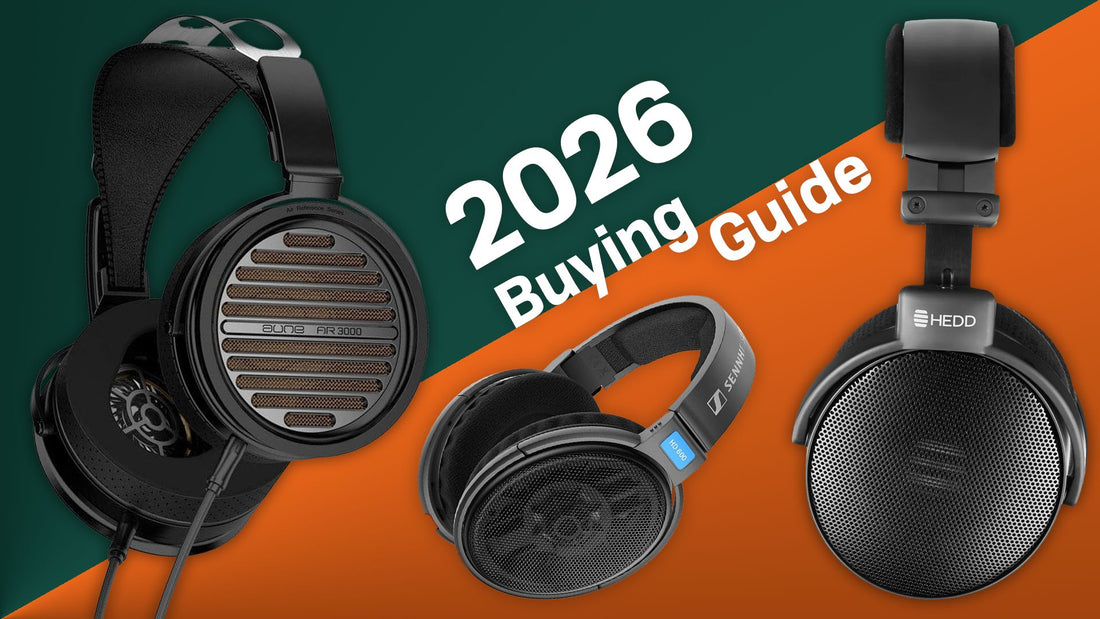
Today, the audiophile headphone landscape offers more exceptional choices across every price tier than at any point in the past decade.
Navigating these options comes down to identifying your listening priorities: do you want open-back for that feeling of airiness, or closed-back isolation? Do you want strict neutrality, or explosive colorations?
Regardless of the exact goal, we're here to help people triangulate what is most likely to work for them, so we've aggregated our strongest over-ear headphone recommendation across categories, consolidating it all into a unified list to help people decide what might be best for them.
Under $250
 Hifiman HE400se ($109)
As an entry-level gateway into the "audiophile-only" territory of planar magnetic headphones, the HE400se delivers the most sub-bass extension at the lowest price of any open-back headphone on the market.
Without EQ, it has a slightly colored midrange—warm due to the 2 kHz relaxation, slightly boxy due to the 800 Hz bump—and a bright, energetic treble response.
It may trend too bright or sharp for some listeners, but for those who like the sense of breathy emphasis from a boosted upper treble response, HE400se may be the cheapest you can get this presentation while still getting solid bass extension.

In terms of caveats, the first is that headband comfort simply is not very good. Adding an aftermarket suspension accessory like a Capra Strap will also help alleviate headband pressure during extended sessions.
Additionally, keep in mind that its low sensitivity requires more driving power than standard smartphone or onboard motherboard audio jacks typically supply. An additional, powerful headphone source like a CrinEar Protocol Max might be necessary if you're a very loud listener or if you're using EQ to boost considerable amounts of bass.
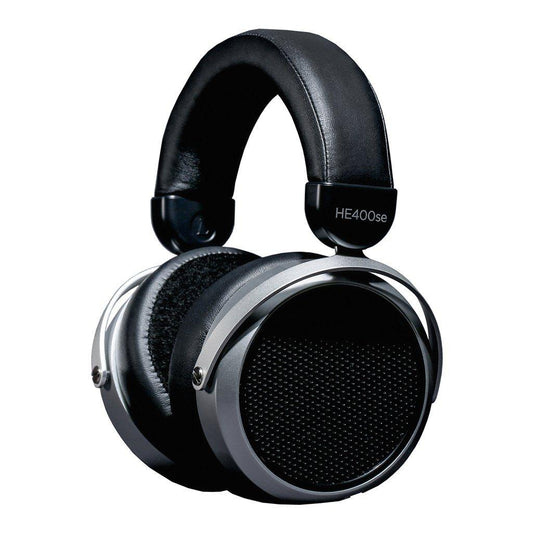
Hifiman HE400se Entry-Level Headphones
FiiO FT1 ($149)

FiiO disrupted the budget closed-back market with the FT1, delivering a headphone that near-completely avoids the thin, boxy, and hollow midrange colorations that plague most closed-back headphones.
The FT1 balances a warm, punchy mid-bass foundation with a subtle forwardness between 1 kHz and 2 kHz that preserves vocal bite and textural presence. Treble above 4 kHz is elevated, biased towards crispness in the upper treble, so FT1 may border on bright for sensitive listeners.

One note is that the stock headband isn't the most comfortable, so we recommend a Capra Strap to aid in making it more of an all-day wear. Once added, the FiiO FT1 becomes a comfortable, great sounding closed-back headphone that in many ways outdoes headphones that cost multiples of its price.
HyperX Cloud Alpha Air ($149)

Yes, it's a gaming headset, but the Cloud Alpha Air also just happens to be one of the most sensibly tuned open back headphones at its price class, which is doubly impressive given its also reasonably comfortable and comes with an onboard microphone.
With Cloud Alpha Air, listeners get a warm, slightly dark overall response that prioritizes naturalness over everything else, which ironically means it might be a better platform for music enjoyment than competitive gaming (the latter of which benefits from significantly reduced bass response for maximized clarity).

In terms of caveats, the main downside for the Cloud Alpha Air is that it's a bit dark in the uppermost treble, which means if you're chasing that heightened sense of detail or effervescent texturing, the Cloud Alpha Air won't provide that in spades.
However, if you just want a solid headphone at an extremely reasonable price and are cool with some gamer branding, Cloud Alpha Air is a serious contender in today's current market.
FiiO FT1 Pro ($199)

FiiO’s FT1 Pro bridges the gap between classic planar magnetic and dynamic presentations, having a bit more treble control than typical planars, while also having more bass extension than typical dynamic drivers in this price range.
FT1 Pro also incorporates an integrated acoustic leak in the ear chamber that introduces a subtle sub-bass lift, and it pairs this with a slightly more polite upper treble than you'll find on a typical Hifiman or Meze planar, more reminiscent of dynamic driver staples like the Sennheiser HD 600.

It solves the "outright bright" signature common to entry-level planar magnetic headphones, however, prospective buyers should note that the driver has a hard physical excursion limit: while it provides great bass out of the box, it cannot accept massive low-end bass boosts via EQ without distorting.
Additionally, the FT1 Pro shares the same headband as the FT1, so we recommend a Capra Strap for this headphone as well.
Hifiman Edition XS ($209)

Originally released at a considerably higher price ($500 USD), steep discounts to its current $209 price have made the Edition XS an exceptional value in the audiophile headphone space.
Edition XS is chiefly characterized by the full bass extension and typical "warm" approach to midrange that most open Hifiman headphones share, but the XS pairs it with quite a bit of upper treble, such that this recommendation is mostly for those who know they want a very bright headphone, or know they're going to be using corrective EQ.

Utilizing very large, under-damped planar drivers, the Edition XS prioritizes the sense of subjective "openness," and ruler-flat bass extension down to 20 Hz. This is the most bass extension you will get in the headphone sphere at this price, so sub-bass fiends should absolutely consider the XS if they're happy to EQ.
Additionally, its design being so open means seal breaks from glasses or jaw movements do not compromise its low-end response, making it one of the better platforms for parametric EQ under $500. However, these large under-damped planar magnetic headphones from Hifiman tend to have distortion issues around the 3-5 kHz region, so even if the bass and midrange work very well with EQ, its possible that Edition XS (and other similar Hifiman designs) aren't the best choice for EQ.
And lastly, the headband on this one is also quite bad, so we recommend a Capra Strap for this headphone as well.
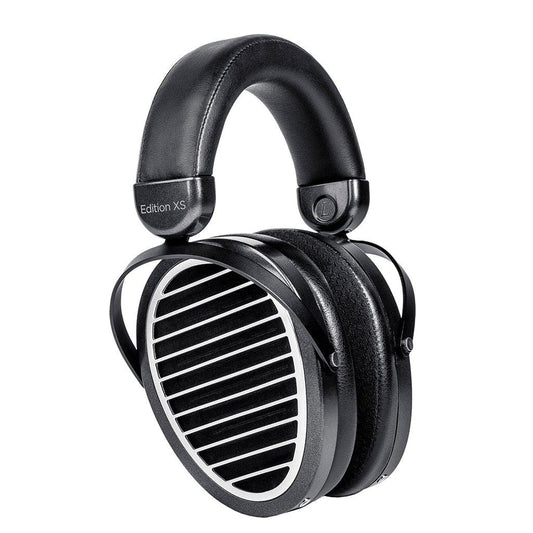
Hifiman Edition XS Headphones
Aune AR3000 ($249) 
This headphone—and this brand, frankly—came out of nowhere in 2026 and became one of the most serious players in the entire audiophile headphone market. Aune's newest AR3000 might even be the best headphone released this year.
AR3000 is smooth, warm, and generous in the bass for this price range—both in terms of boost, as well as extension. It pairs this all-rounder tuning with a reasonably lightweight (300g) chassis that can be worn all day without the clamp headaches of certain other "vise-like" headphones.

Because of its angled-driver design, positional variation in the 1-3 kHz band is on the higher side, which means depending on how forward or backward you seat the headphone on your head, you will get less or more in this 1-3 kHz frequency band, respectively.
But even the positional extremes do not represent massive problems for instrument timbre—fully-backward entails a "neutral" upper midrange, while a fully-forward seating relaxes the upper midrange similar to Hifiman's headphones.
What AR3000 excels at is offering a well-extended, natural sounding headphone—which is on its own an accomplishment few headphones can really be said to do—but it does so at an almost market-breaking $250 price point.
By that we mean: If you want to get the best headphone for the least amount of money, AR3000 is that headphone. It has among the fewest compromises on this entire list, while also having one of the most affordable prices, and is currently our highest ranked headphone on our ranking list. So if you just want the best headphone on this list in terms of value, this is the one to grab.

Aune Audio AR3000 Headphones
Under $500
Sennheiser HD 550 ($349)

Sennheiser’s HD 550 delivers an exceptionally linear midrange presentation while partially addressing the primary shortcoming of the legacy 6-series: bass extension.
Like the 6-series, the HD 550 goes for neutrality above all else, and for the most part it gets very close for a super respectable price. Unfortunately its still not quite to the level of bass we'd say is accurate, and its treble can be a bit divisive based on both positioning and individual anatomy, but for the most part HD 550 serves as a solid less-expensive alternative to the legendary HD 600 and 650, and for some may even be the better headphone overall.

Even if its not a fully-extended bass rise, HD 550 still digs more than half an octave deeper into the sub-bass than the HD 600 or HD 650, providing a smidge more low-end presence without sacrificing vocal clarity. HD 550 also has a slightly different shaping to the midrange than either of the 6 series offerings, having less in the 3 kHz region specifically than either of them—and some people who found HD 600 shouty may prefer HD 550 in this area.
In terms of caveats, the biggest is that the headband is not especially comfortable on its own. While its better than some of the other "strapless" headphones on this list, it still improves with a Capra Strap.

Sennheiser HD 550 Headphones
Hifiman Edition XV ($349)

Departing from Hifiman’s signature bright, analytical house sound, the Edition XV is voiced for warmth, midrange richness, and fatigue-free listening. It retains the massive earcups and minimal damping of Hifiman’s other egg-shaped designs, while smoothing over upper-frequency peaks and offering a smoother, thicker listen.

Instead of vocal sibilance and cymbals dominating the presentation, fundamentals and early overtones of vocals and acoustic instruments step forward in the mix slightly, and feel more supported by the generous bass extension here than Hifiman headphones usually sound without EQ.
Edition XV was our headphone of the year last year because it provides a solid, warm-neutral approach to voicing that is neither terribly expensive nor massively compromised. Sure, it may be a bit too warm for some folks, but we think this headphone is an excellent, unique offering at this price range that many people are going to enjoy.
Thankfully, the Edition XV also comes with Hifiman's new upgraded suspension headband, so its less likely people need a Capra Strap for this one.

Hifiman Edition XV Headphones
Sony MDR-MV1 ($399)

Designed specifically for spatial audio production and simulated multichannel mixing, the Sony MDR-MV1 embraces an unapologetic V-shaped profile, but done sensibly.
MDR-MV1's bass profile is thick, highlighting the decay of kick drums and the plump rotundness of bass guitars palpably, while balancing it with enough sparkle and crispness above 5 kHz to counterbalance the abundant bass lift. It does all of this while having one of the better, more linear midrange tunings available on the market.

The treble elevation looks very stark/problematic on measurement rigs, but this headphone does not have quite as much emphasis as you might think, given on certain human heads the 8 kHz elevation almost completely evaporates. With that said, MDR-MV1 is still a bright headphone, and it yields an engaging, fun presentation that doesn't abandon balance.
Additionally, weighing just 223 grams, MDR-MV1's featherweight construction and breathable suede pads also make it one of the most comfortable feeling headphones on this list for normal-to-large heads. Smaller heads again may want a Capra Strap though.
Sennheiser HD 480 Pro ($399)

Both listener and Resolve rate this headphone among the best closed back headphones available, regardless of price, and when looking at its measurements, it's clear why: HD 480 Pro is a controlled, relaxed-sounding approach to a product category that usually has tons of problematic midrange and treble colorations.
HD 480 Pro only has a slight bass lift above what we think most people would prefer, and a slight cut in the 200 Hz range to offset the slightly overblown bass, but even with those things, HD 480 Pro sounds excellent for most music and has few if any dealbreaking colorations.

Additionally, the HD 480 Pro is one of the most well-built, comfortable headphones at any price. The earcups are sufficiently large and well-padded, the headphones themselves are lightweight, and the ease of storage or just taking them off to set on a desk is so well-considered that, even if it didn't sound half as good as it does, HD 480 Pro would still be one of the most livable closed-back headphones out there.
It just so happens to also sound excellent, so for us, this is where we would say you should stop if you're looking for a closed back headphone; they don't really get meaningfully better above this price, certainly not proportionally to how much more you'd have to spend to get something similar.
Sennheiser HD 600 ($499)

The HD 600 has served as the industry’s reference point for neutral vocal and instrument timbre for almost 30 years. Its midrange tuning remains a masterclass in tonal coherence; guitars, brass, strings, and vocals simply sound correct for the most part, and many headphones still have not encroached meaningfully on HD 600's value proposition when it comes to wanting reference-level clarity above all else.

Its shortcomings are well-known at this point: an intimate soundstage, sub-bass roll-off below 60 Hz, and a potential dip between 6 kHz and 9 kHz that can impart a more "polite, subdued" quality to some listeners.
Despite newer competitors coming and going, HD 600's user-serviceable design, reliable driver matching, and focused honesty have ensured its status as a permanent fixture in the audio world acting as the measuring stick all other headphones are judged against, for better or worse.
In terms of caveats, we would say that HD 600's bass-light response does mean if you're unlucky enough to get treble resonance issues with HD 600, its likely that the lack of bass will exacerbate this and make it sound too bright/lean.
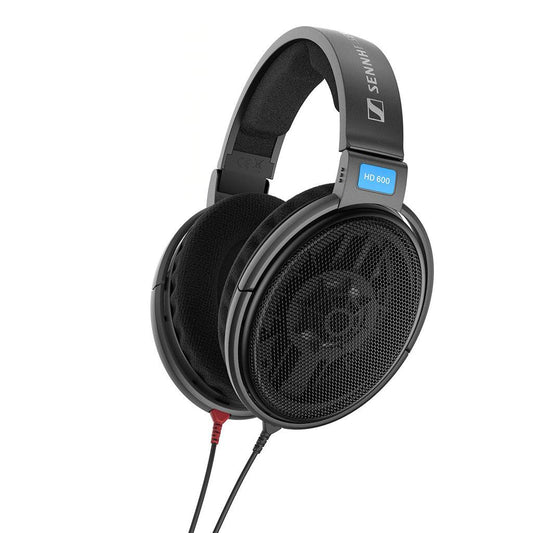
Sennheiser HD 600 Headphones
Under $1000

Sennheiser HD 650 ($549)
Sharing the legendary chassis, durability, and driver design of the HD 600, the HD 650 shifts the tonal balance toward a warmer, and importantly, more forgiving presentation.
HD 650 shares most of the benefits of the HD 600 in terms of timbre and naturalness, but the two are actually deceptively different acoustically, such that people should think a little bit about what they want before buying one over the other.
HD 600 uses a heavier driver with a more open baffle, which means in addition to it being a bit brighter, the additional openness can make HD 600 sound considerably more "open" than the HD 650. So if you're prioritizing openness, HD 600 is the most open 6 series headphone you can get.

Alternatively, the HD 650's slightly elevated mid-bass warmth means the 650 is least likely to fatigue, and it accomplishes this balancing act while preserving the lifelike midrange that make this family of headphones legendary.
HD 650 remains the quintessential choice for relaxing, long listening sessions where clinical analysis takes a back seat to musical immersion, but if you're looking for something a bit more energetic and expansive, the HD 650 is likely not to be the best choice.

Sennheiser HD 650 Headphones
Hifiman Arya Stealth ($599)

Formerly occupying the kilobuck range, aggressive price adjustments have made the Arya Stealth an one of the most insane values in over-ear headphones. It represents the pinnacle of Hifiman’s large-format oval planar design, adding cup swivel, a premium suspension headband, and Stealth Magnets to reduce resistance at certain treble frequencies.
The results is, yes, a very bright headphone, but one that exemplifies Hifiman's approach to creating delicate, soft presentation that for some is incredibly addicting. It shares the same hallmarks of tuning that Hifiman's similar headphones also exhibit, but unlike the more value-oriented options, comes with a more comfortable chassis than the less expensive options thanks to its suspension strap headband.

The result is a grand, yet fleet-footed presentation with razor-sharp images and full bass extension. Its upper registers are unapologetically bright, but some may see this as "revealing" instead of "exaggerated.". Listeners seeking a neutral, warm, or dark profile should absolutely avoid it (or use parametric EQ), but for those who want to maximize that airy, breathy presentation, this might just be the best on the list for that quality.
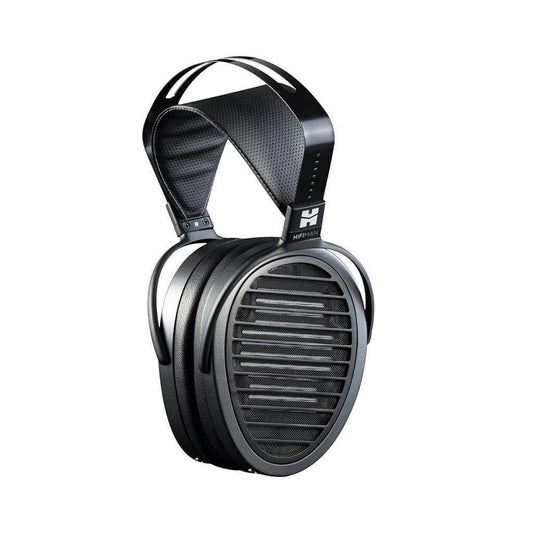
Hifiman Arya Headphones | Stealth Magnets Edition
HEDDphone D1 ($799)

The HEDDphone D1 stands as one of the most mature open-back neutral references to emerge in recent memory. Where previous contenders have struggled to replicate the Sennheiser HD 600’s magical vocal realism while expanding its technical boundaries, the D1 might even improve on it.
D1's midrange is impeccably linear, its sub-bass extends cleanly with palpable authority, and treble is spritzy enough to feel complete and well-extended, while not so bright that it causes the headphone itself to lean too cold or sibilant.

D1's industrial design consists of a fully user-serviceable chassis, it weighs a manageable 350 grams, and its backed by a five-year warranty, which is one of the best warranties you'll find in the high end audio space.
That said, even with all of D1's strengths, it does still have caveats. For one, the included headband pad is pretty stiff and uncomfortable, potentially the least comfortable on this list, so yet again, we highly recommend using this one with a Capra Strap.
Additionally, resonances around 5 kHz and 10 kHz may cause a bit of excess sharpness for certain listeners, so if you're treble sensitive, this one might be worth trying before buying. But even with those potential downsides, D1 still remains the benchmark for natural, well-extended sound reproduction in the sub-$1,000 category.

HEDD Audio HEDDphone D1 Headphones
Conclusion
Headphones interact with people's ears in a complex way that makes it hard to responsibly recommend headphones to others without having the end-user try them first. That's why this list intentionally avoids recommending some of the headphones that we actually do like, but have tuning or ergonomics quirks that may make them less of a safe bet for a given consumer.
Headphones are intensely personal devices, and there are few things worse than being stuck with one that doesn't work for you.
That's also why this list doesn't go above $1000; every single product in the high end that would've been on this list has similar products in the lower price brackets. Despite us loving the $1399 Aune AR9000, it is very similar to the $249 AR3000, such that most people should try the latter first to see if that approach works for them. The $899 DCA Aeon Core is one of the best sounding premium closed-back headphones available right now, but its also extremely similar in performance to the $399 HD 480 Pro on this list.
if you want to go above $1000, its almost a certainty that you'll be able to find something similar to the expensive options, but for less money, which will give you an idea if the sound signature of that expensive headphone is actually what you're looking for or not.
Though this list is by no means exhaustive, we've heard most of the stuff that's out there, which is why we feel confident that these are the headphones people should be looking out for.
Hifiman HE400se Entry-Level Headphones
Hifiman Edition XS Headphones
Aune Audio AR3000 Headphones
Sennheiser HD 550 Headphones
Hifiman Edition XV Headphones
Sennheiser HD 600 Headphones
Sennheiser HD 650 Headphones
Hifiman Arya Headphones | Stealth Magnets Edition
HEDD Audio HEDDphone D1 Headphones
